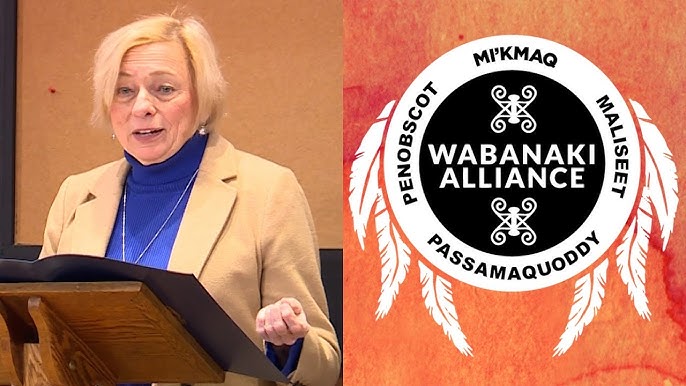
Gov. Janet Mills said on Thursday that she will allow a bill to become law that gives tribes in Maine the exclusive right to offer online casino games—a move that drew rapturous praise from Wabanaki chiefs.
Mills said in a written statement that she agreed to support the bill after speaking with five elected chiefs of the Wabanaki Nations during the fall. The chiefs said the bill is vital for economic sovereignty and would provide “life-changing revenue.”
Mills said she would allow the bill to become law without her signature even though she has “concerns about the impact of gambling on public health.” But Mills expressed confidence that the state’s Gambling Control Unit would provide proper oversight while ensuring the tribes benefit.
“I believe that this new form of gambling should be regulated,” Mills said. “It has always been my strong desire to work with Tribal leaders to improve the lives and livelihoods of the Wabanaki Nations, and it is my hope that this new revenue will do just that.”
The National Association Against iGaming blasted Mills’ decision, accusing the governor of abandoning her longstanding opposition to online gambling to help her U.S. Senate campaign.
ALSO READ: Controversial Trump gambling tax changes went into effect Jan. 1: What you need to know
“The timing of this decision cannot be ignored,” the group said in a written statement. “While only the Governor can explain her change of heart, it is difficult to view this decision as anything other than a political calculation rather than a policy driven by evidence or public interest.”
In order to reverse the law at the polls, the group intends to initiate a People’s Veto.
The bill was the final one from the previous session that Mills needed to take action on. She had the option to veto it. Rather, she added a fresh chapter to Mills’ conflicting record on indigenous relations by allowing it to become law. The Democratic party’s base is fervently in favor of Maine politicians acknowledging the complete sovereignty of tribes.
Due to two agreements from the 1980s that resulted from tribal claims to two-thirds of the state, Wabanaki Nations here function more like municipalities than the majority of other federally recognized tribes. The federal government is usually in charge of other federally recognized tribes.
Courtesy: https://www.covers.com, https://www.casino.org, https://pechanga.net